
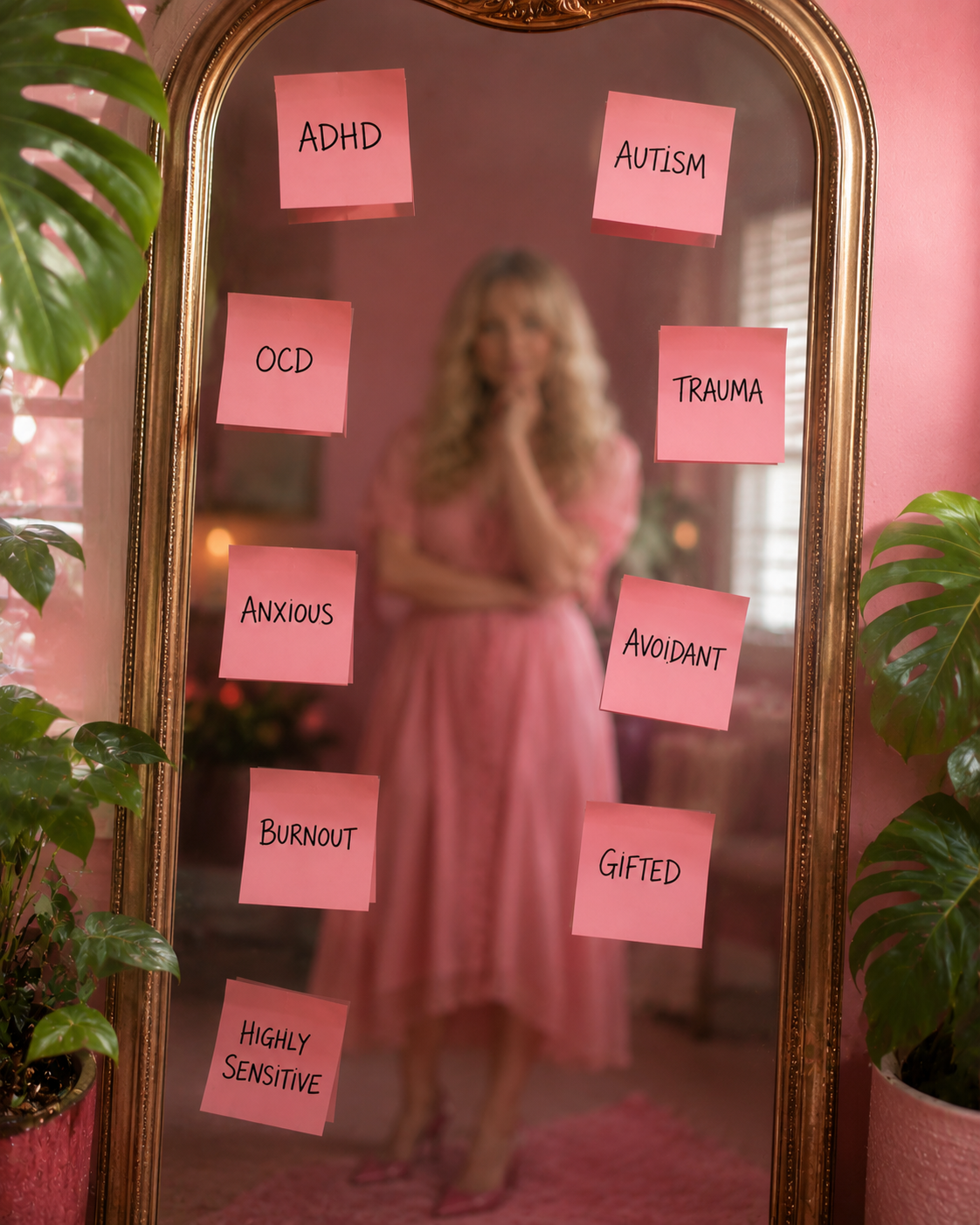
If we’re constantly reminding people to question AI’s answers, why do so many people stop questioning it the moment it starts talking about them?
By: Jan Dominy
I can’t stop thinking about that question.
We tell people not to trust AI to write their term papers. Every hallucinated fact becomes another reminder to verify its output. We caution people to double-check its medical advice, question its legal information, and never take its answers at face value.
And then, without missing a beat, we ask it:
“Am I autistic?”
“Do I have ADHD?”
“Is my partner a narcissist?”
“Do I have trauma?”
“Why am I like this?”
Somewhere along the way, we turned diagnosis into the destination instead of the starting line. Let me be clear: mental illness is real. Neurodevelopmental disorders are real. Therapy changes lives.
Clinicians sometimes misdiagnose people. They also miss diagnoses entirely. For decades, psychology overlooked many women, minorities, and adults, and the field is still working to correct those blind spots. None of this article argues otherwise. This article is about something different: what we’ve started doing after the diagnosis—or more accurately, what we’ve stopped doing.
The DSM-5 Isn’t a BuzzFeed Quiz
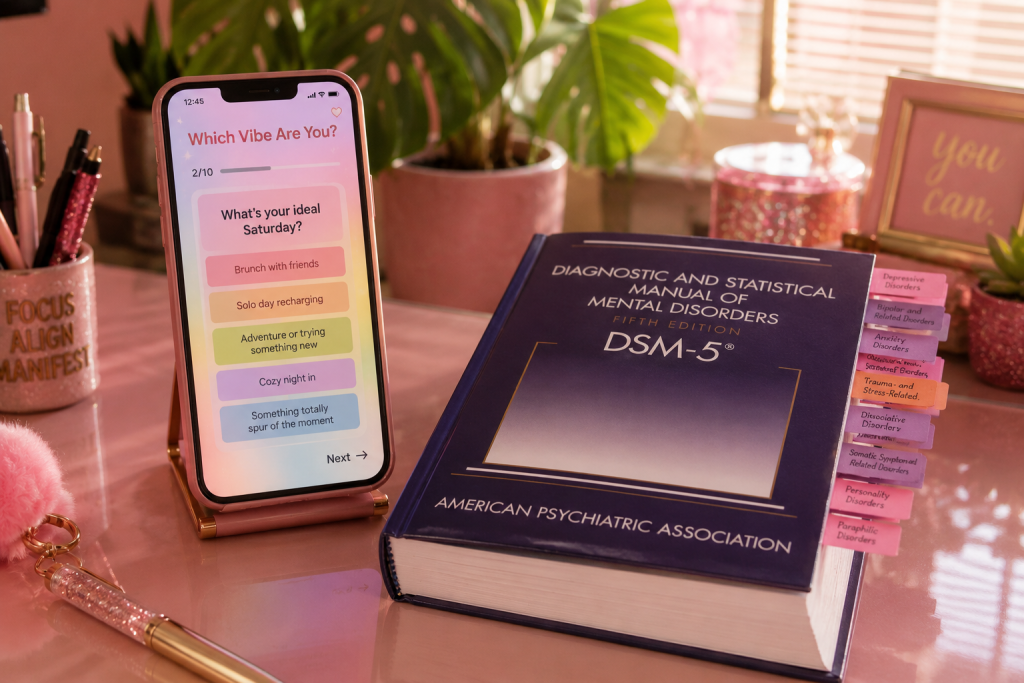
The DSM-5 isn’t a BuzzFeed quiz.
The American Psychiatric Association created the DSM-5 to help clinicians diagnose and treat mental disorders, not so people could scroll through symptom lists at one in the morning, relate to four bullet points, and walk away with a new identity.
The Diagnostic and Statistical Manual of Mental Disorders (DSM-5) is a clinical reference. Mental health professionals use it to compare symptom patterns, rule out competing explanations, evaluate how long symptoms have been present, determine whether those symptoms create meaningful impairment, and ultimately decide which diagnosis best fits the whole picture.
That’s a lot different than asking, “Does this sound like me?” In practice, diagnosis is not a simple exercise in matching a few familiar traits to a checklist; it involves careful clinical judgment that takes into account context, duration, severity, and the ways symptoms affect a person’s daily functioning. Clinicians weigh multiple possibilities, rule out alternative explanations, and consider the whole person rather than isolated characteristics. Most importantly, diagnosis has always had a clear purpose: to guide treatment. It is meant to answer a single, practical question:
What is the best evidence-based path to help this person suffer less?
That is the point. A diagnosis is not the finish line where understanding ends; it is the starting point from which meaningful change and support can begin.
When Did Labels Become the Goal?
Something has shifted culturally in the way we think about mental health and diagnosis. Not long ago, receiving a diagnosis was typically understood as a step along the path toward treatment, a way to clarify what was happening so that a person could begin addressing it. Today, however, it often feels as though the diagnosis itself has become the destination. For many people, once they arrive at a label that feels accurate or validating, the urgency to pursue treatment seems to fade.
I understand why this happens. A label can be profoundly relieving. A label can bring clarity to years of confusion and frustration. Patterns that once felt random suddenly make sense. It gives people words for experiences they never quite knew how to explain, making conversations with others, and even with themselves, a little easier.
It can also open the door to community. Finding people who genuinely understand your experience can reduce isolation, validate your struggles, and remind you that you aren’t the only one walking this path.
In some cases, a diagnosis can also provide practical benefits. It may open the door to accommodations in school or the workplace, make it easier to access insurance coverage, or offer legal protections that improve a person’s quality of life. These are meaningful and important outcomes, and they highlight why labels can matter so much.
But labels, on their own, do not heal people. A diagnosis can explain suffering, but it does not automatically reduce it. Understanding what you are experiencing is an important step, but it is only the beginning. Without some form of treatment, support, or intentional change, the underlying challenges often remain exactly as they were before the label was applied.
The Internet Loves an Identity

Social media didn’t invent mental illness, but it has dramatically changed how we talk about it and how quickly those conversations spread. Platforms that were originally designed for entertainment and connection have become major hubs for psychological language, where complex clinical ideas are distilled into short, highly shareable content.
Today, it’s entirely possible to spend an evening scrolling through videos where creators explain autism, ADHD, OCD, attachment styles, trauma responses, personality disorders, and nearly every other psychological concept imaginable. For many people, this is their first exposure to these ideas, and in some cases, it can be genuinely helpful. Some of this content is thoughtfully created, grounded in real knowledge, and encourages viewers to seek professional help when needed. It can reduce stigma, normalize difficult experiences, and make people feel less alone in ways that traditional systems have often failed to do.
That part is undeniably positive.
At the same time, social media platforms are built to reward clarity, confidence, and emotional resonance. Content that feels certain and personally meaningful tends to perform better than content that is cautious or nuanced. As a result, the stories that rise to the top are often the ones that make us feel immediately understood.
Algorithms then amplify this effect. They are designed to notice what captures our attention and give us more of it. If one video about ADHD feels relatable, the platform will likely show you many more just like it. Over time, this repetition can create a powerful sense of recognition. What begins as a possibility—something to consider or explore—can gradually start to feel like a definitive answer.
Eventually, it stops feeling like a question.
It starts feeling like a conclusion.
Community Is Powerful
Finding people who understand you can be life-changing. I’ve watched communities help people feel less alone, reduce shame, and encourage people to seek therapy and build healthier lives. Community is one of the most powerful forms of healing we have.
But communities have blind spots too. Sometimes a community becomes so focused on helping people feel understood that it stops asking whether the conclusion is actually correct.
Psychologists have studied confirmation bias for decades. Humans naturally notice information that supports what we already believe and often overlook information that challenges it. That tendency doesn’t disappear just because the topic is mental health. If anything, identity can make it even stronger.
Belonging feels good. Being wrong doesn’t.
Enter AI
Now we’ve introduced something entirely new into the equation. Millions of people are using AI to think through their emotions, relationships, childhoods, and mental health.
For the record, I’m unapologetically pro-AI, and I’m also unapologetically pro-human. Those are not competing values.
I use AI almost every day. It helps me research, organize complicated ideas, write more clearly, and challenge my own thinking. I believe AI is going to become one of the most important technologies of our lifetime. I also believe we have to be thoughtful about what we’re asking it to do.
Can AI Be Your Therapist?

This is where the conversation usually becomes polarized. One side insists AI should never be involved in mental health, while the other treats it like the inevitable future of therapy. I think reality is much more interesting than either extreme.
AI is incredibly useful in ways that are already helping people. It can support journaling, explain psychological concepts in accessible language, and introduce evidence-based techniques like cognitive behavioral strategies. It can even help someone prepare for therapy by organizing their thoughts or identifying patterns they want to discuss. For people who can’t afford therapy or are sitting on a six-month waiting list, those capabilities matter. Access matters.
But therapy has never been just information. Back in the 1950s, psychologist Carl Rogers argued that one of the foundations of effective therapy was something he called unconditional positive regard. Along with empathy and genuineness, he believed that the relationship itself was part of what helped people grow.
That raises a fascinating question:
Can a machine genuinely offer unconditional positive regard? This idea, rooted in humanistic psychology, suggests a deep, authentic acceptance that goes beyond surface-level understanding. It implies a presence that is not only responsive but also emotionally attuned in a way that fosters trust and growth.
Or is it simulating empathy well enough that our brains respond anyway? Perhaps what matters is not whether the empathy is real in a human sense, but whether it feels real enough to produce meaningful effects. If our minds interpret the interaction as supportive and understanding, the outcome might still be beneficial, even if the source lacks true emotional experience.
I don’t know the answer. It’s a complex question that touches on both the nature of consciousness and the mechanisms of human connection.
I’m not convinced psychology knows the answer yet either. The field is still grappling with how to define and measure empathy, let alone determine whether it can be authentically replicated by machines.
But I think it’s a question worth asking.
Validation Isn’t the Same Thing as Treatment
One of my biggest concerns isn’t AI. It’s what we expect from it.
Validation feels wonderful, and sometimes it’s exactly what we need. Feeling seen and understood can be deeply comforting, especially when we’ve spent a long time questioning our own experiences. But validation and treatment are not synonyms, and confusing the two can quietly limit our growth.
A good therapist doesn’t only tell you that your feelings make sense. They also challenge cognitive distortions, notice inconsistencies, and ask uncomfortable questions. They gently point out patterns you may not see yourself, helping you connect dots that are difficult to recognize from the inside.
Sometimes they tell you something you don’t want to hear, because helping you grow is more important than helping you feel immediately validated. That’s a very different job.
Keeping the Humanity in the Humanities
I don’t think AI is the enemy. Fear has never been a particularly good innovation strategy, but neither is blind enthusiasm. Technology should make us better thinkers, not replace thinking. AI should help us ask better questions, not become the unquestioned authority on the biggest questions of our lives.
A diagnosis can be life-changing, and a community can be life-saving. AI can become an extraordinary tool for education, reflection, and accessibility. But none of those things should replace curiosity. None of them should replace treatment. And none of them should convince us that understanding ourselves is the same thing as healing ourselves.
A diagnosis can tell you where to begin.
Even an expert opinion, grounded in real understanding and empathy, can’t walk the journey for you.
Leave a Reply